On this page (6 sections)
Coaches to Gatwick in one minute
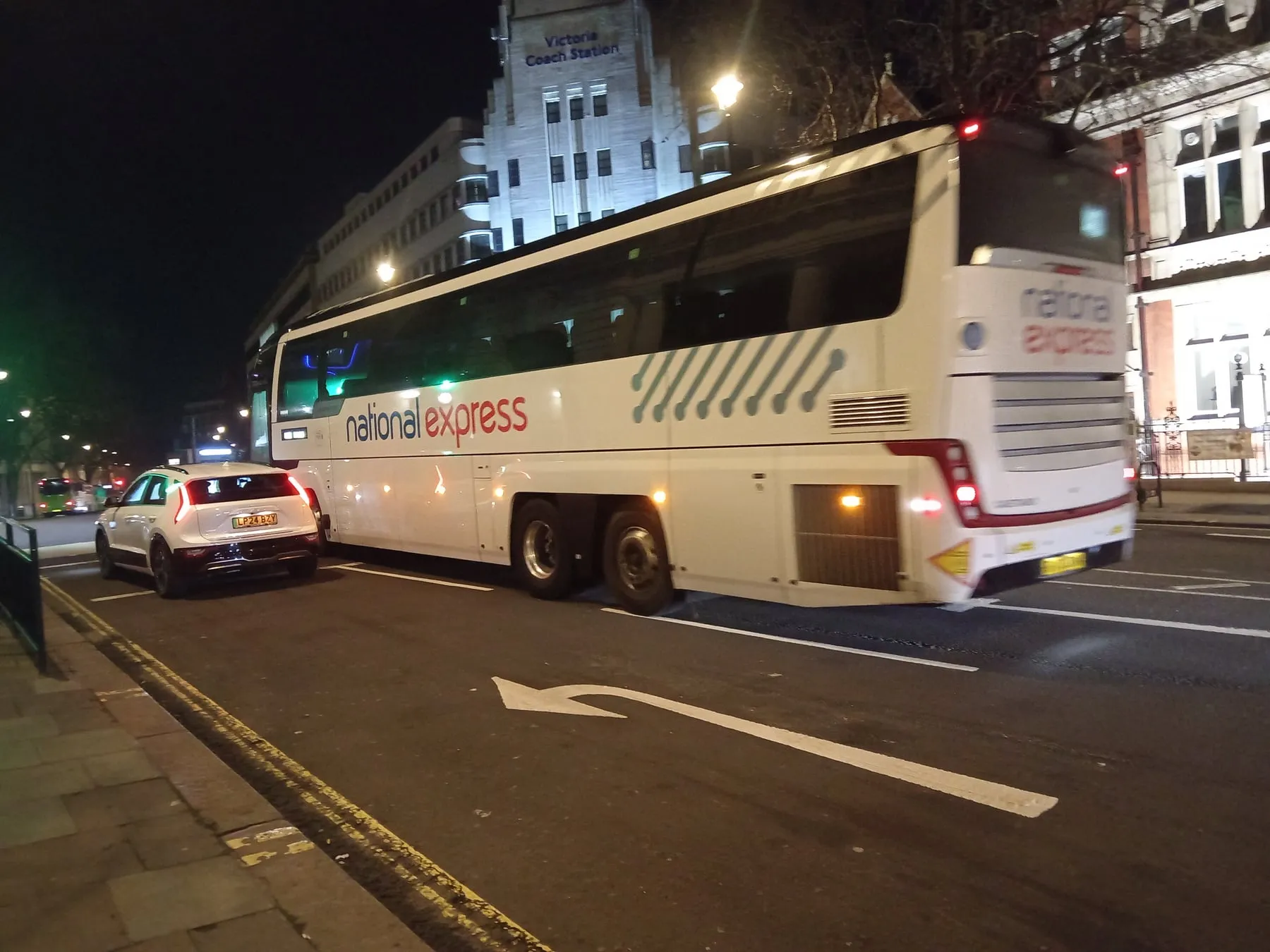
The coach is Gatwick's budget link to London. National Express runs the main service, its 025 route, from both terminals to London Victoria Coach Station, with advance fares from about £6 and a journey of roughly 1 hour 5 minutes to 1 hour 20 minutes depending on traffic. easyBus, Megabus and FlixBus run their own low-cost services into London alongside it. Coaches stop on the lower forecourt at each terminal, a level below the trains.
Set against the train, the coach is a straight swap of time for money: about £6 booked ahead rather than roughly £15, but around an hour and a quarter rather than half an hour, and exposed to road traffic in a way rail is not. That makes it the right choice when the fare matters more than the clock, and it also reaches places rail serves awkwardly, including a direct run to Heathrow that no train matches. The sections below cover the operators, the exact stops, and the routes beyond London.
London: National Express and the budget rivals
National Express is the main coach operator at Gatwick. Its 025 service links both terminals with London Victoria Coach Station up to around 20 times a day, running close to around the clock, with the earliest departures near 03:35 and the last near 23:45. The journey is roughly 1 hour 5 minutes to 1 hour 20 minutes, the spread coming from traffic and the number of stops a given service makes. That near-24-hour span is one of the coach's real advantages: it covers the early-hours and late-night gaps when trains thin out.
The budget operators compete on the same corridor. easyBus runs frequent low-cost coaches from Gatwick to west London, around the Earl's Court and West Brompton area, roughly every 15 minutes at peak and across most of the day, with cheap advance fares. Megabus and FlixBus also run Gatwick to London Victoria. Between them the fares are keen if you book ahead, and the right pick depends on which London drop-off suits you and what each is charging on your date. For the full corridor against rail and road, see the Gatwick to London comparison.
Where coaches stop at each terminal
At the South Terminal, coaches use the lower forecourt, at stops 1 and 5, which sits one level below the railway station, so an arriving coach drops you a short walk and a lift or escalator from check-in. At the North Terminal, coaches use the lower level outside the international arrivals area. Both terminals are served, so the one thing to get right is which terminal your coach uses, printed on your ticket, and which one your flight uses. If you need to move between the two, the free shuttle crosses in about two minutes.
Coaches are the scheduled, ticketed long-distance services described here. They are separate from the local buses that serve the airport and the surrounding towns, which use the same forecourts but run shorter routes on a turn-up-and-go basis; those are covered on the local bus page. If you are not sure which terminal you are flying from, the terminal lookup settles it by airline.
Beyond London and airport to airport
The coach comes into its own on routes where rail forces a change or a long detour. The clearest case is airport to airport: National Express runs a direct coach between Gatwick and Heathrow, terminal to terminal, in as little as about 50 minutes in clear traffic, with over 60 services a day and fares from around £15. Because there is no direct train between the two airports, the coach is the simplest public transport link, and the alternative by rail means crossing London with your luggage. The Gatwick to Heathrow page compares them in full.
Coaches also serve towns and cities where a direct road service beats a rail trip that would run through London. From places like Oxford and the Midlands corridor to Birmingham, a direct coach can be simpler and cheaper than a rail journey with one or two changes, even when it is slower, which is exactly the calculation those route pages set out.
Fares, tickets and luggage
Coach fares reward booking ahead. National Express advance singles to London start from about £6, and the budget operators can match or beat that on their day, but the cheap fares are the advance ones: prices climb closer to departure and at busy times, so the saving is in booking early rather than turning up. Buy online or in the operator's app for the best price and a guaranteed seat, and check each operator for your date rather than assuming one is always cheapest.
Luggage is where the coach quietly beats a crowded commuter train. National Express includes a generous hold allowance stowed under the coach, so large or multiple cases travel out of the way rather than wedged by the doors, which suits a family or anyone with a lot to carry. Allowances and any charges for extra bags vary by operator, so check the terms when you book. Fares change and are set by the operators, so treat the figures here as a guide and pull a live price before you travel.
Coach versus train
The choice between coach and train into London is money against time and reliability. The coach wins on price: from about £6 booked ahead, it undercuts the roughly £15 train fare, and its near-24-hour span covers hours when trains are sparse. The train wins on speed and certainty: 30 to 45 minutes into central London against about 1 hour 15 by coach, more frequent, and immune to the road traffic that can stretch a coach journey at peak times.
So the honest rule is simple. Take the coach to save money, when your timing is flexible, when you are travelling at an awkward hour, or when you have heavy luggage and want the hold space. Take the train when speed and reliability matter, especially with a flight to catch. And for the whole picture across every mode, including taxi and car, every way to reach Gatwick lines them up side by side.