On this page (5 sections)
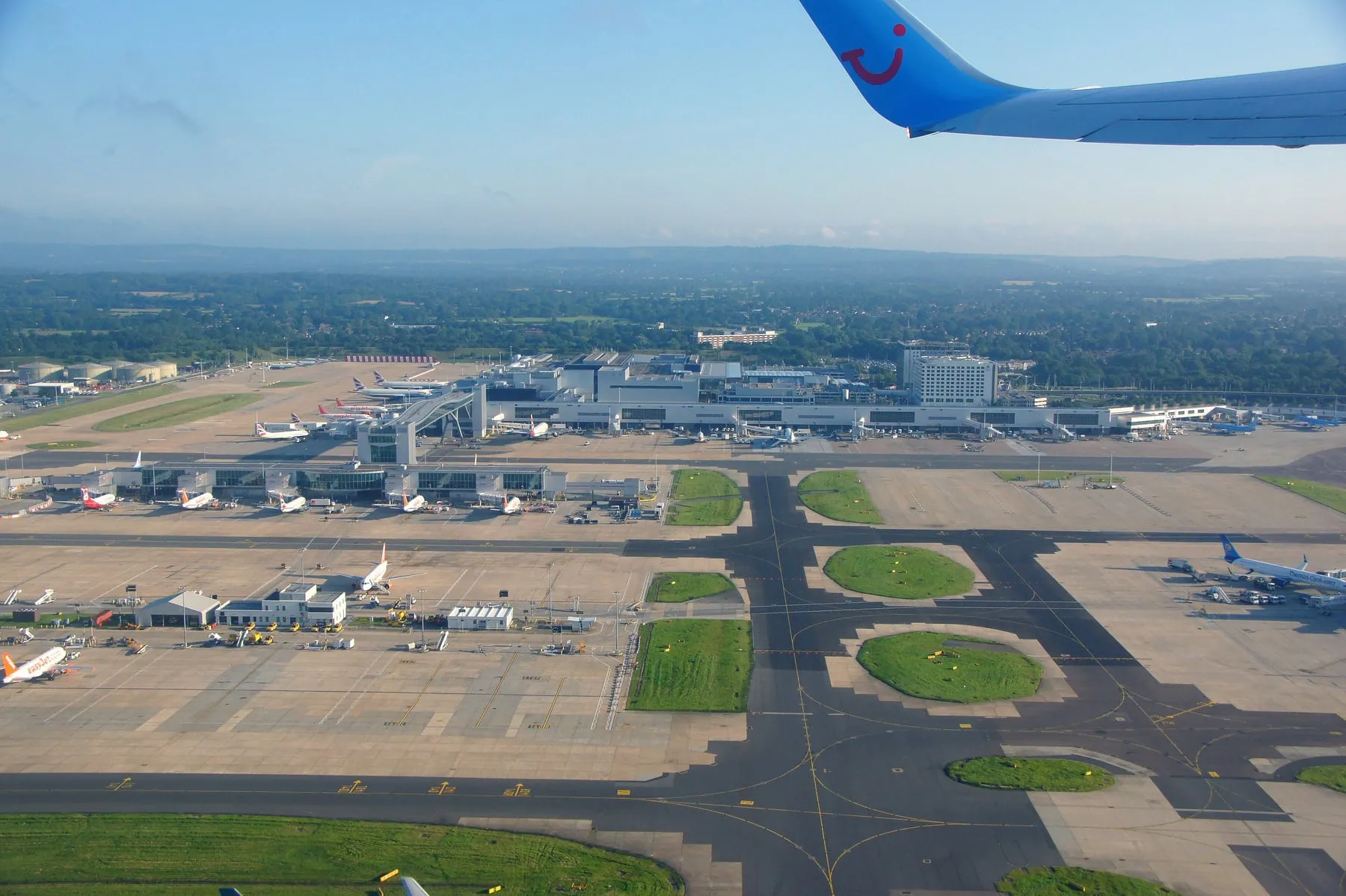
Two terminals, one airport
Gatwick has two terminals. The South Terminal is the original, opened with the rebuilt airport in 1958 and extended ever since into the larger building of the pair, at around 160,000 square metres. It holds the railway station, British Airways and around 35 other airlines. The North Terminal opened in 1988 across the airfield, more compact at about 98,000 square metres but ferociously busy, because easyJet, which operates roughly half of all flights at Gatwick, flies everything from there. Between them the airport handled 43.2 million passengers in 2024, second in the UK only to Heathrow.
Unlike Heathrow's numbered terminals, Gatwick's are named, and the names carry the only geography you need: they sit north and south of each other on opposite sides of the airfield, too far to stroll between casually, close enough that a free shuttle makes the distance trivial. Each terminal is a complete airport in miniature: its own check-in halls, security, lounges, shops, restaurants and hotels at the door.
Which terminal do you need?
Your airline decides, and it only takes a tap to check: North or South for your flight holds the full lookup. The headline allocations: easyJet flies everything from North (since the start of the summer 2026 season), British Airways flies everything from South, and TUI splits by flight number, BY from South and TOM from North. Most of the other low-cost names (Ryanair, Wizz Air, Vueling, Norwegian, Jet2) are at South, while Emirates, Qatar Airways and the North American leisure carriers cluster at North; the airline directory profiles the whole roster.
Allocations move, as easyJet's 2026 consolidation proved, so the terminal on your booking confirmation always outranks memory. Get it wrong on the day and the recovery costs about ten minutes on the shuttle, not a missed flight, provided bag drop is not about to close.
Between the terminals and to the trains
The terminal shuttle is the connective tissue: free, driverless, every five minutes or so (every ten overnight), two to three minutes per crossing, running 24 hours a day with level boarding and trolleys welcome. It is landside, which means anyone can ride it, and also means a cross-terminal flight connection involves security again; Gatwick advises at least 90 minutes between flights when a terminal change is involved.
The railway station is the other half of Gatwick's geography lesson: Gatwick Airport station is inside the South Terminal, seven step-free platforms with a train on average every four minutes, so rail travellers land at South by definition and reach North by shuttle in about ten minutes door to door. Drivers get a terminal each: the M23's Junction 9 spur signs North and South separately, with drop-off zones, short stay and long stay at both.
Inside each terminal
The two buildings organise themselves differently, and knowing the shape saves minutes. At South, check-in, arrivals and the station walkway share one level (zones A to K), with security and the departure lounge one floor up. At North, arrivals sit at ground level, the shuttle and self-service kiosks one level up, and the main check-in hall (zones A to E) at the top, with security on the same floor as the desks. Gate-wise, South's three piers carry gates 1 to 95; North's three include Pier 6, reached by the bridge that crosses a live taxiway with aircraft passing beneath.
The deep guides carry the full detail (everything at South, everything at North), the floor plans live on the South Terminal map and North Terminal map, and the airport map shows how the terminals, station, car parks and hotels fit together on the ground.
The airport is changing
Gatwick is working to bring its Northern Runway into routine use alongside the main runway, a project that would grow traffic through both terminals and reshape parts of the airfield over the coming years. What is approved, what is built and what it means for passengers is tracked on the Northern Runway page; for now, nothing about the two-terminal layout above changes.