On this page (6 sections)
Gatwick to Brighton in one minute
Gatwick to Brighton is one of the easier trips on this whole site: a single direct train, about 26 minutes at its fastest and 30 typically, straight down the line to the coast with no change. Gatwick sits on the Brighton Main Line, so the seaside city is simply the southern end of the same route that runs up to London, and trains are frequent in both directions. It is the same quick run either way: arrivals heading for the sea one direction, Brighton residents flying out the other.
The one-line answer: at the airport, go down to the station inside the South Terminal and take the next southbound Southern or Thameslink service towards Brighton; coming the other way, do the same in reverse for Brighton to Gatwick. Book ahead and the fare drops to about £8. One thing to know: contactless and Oyster do not reach this far south, so you need a proper ticket rather than a tap. For the London direction instead, see the Gatwick to London guide.
The direct train down the line
Brighton is a straight run south from Gatwick through the Sussex countryside, and depending on the service the train calls at some of Three Bridges, Haywards Heath, Burgess Hill, Hassocks and Preston Park before the coast. The fastest services reach Brighton in about 26 minutes, with around 30 typical and the slower stopping trains a little more. It is a busy line: roughly 176 trains a day run the route across the operators, so for most of the day you turn up and catch the next one rather than planning around a timetable.
Two operators share the work, and you do not need to prefer either. Southern runs frequent coast services, and Thameslink trains to Brighton are the same ones that thread all the way up through London, so a Brighton service at Gatwick may have come down from Bedford or St Pancras. Some Gatwick Express trains continue to Brighton too. The fast hub one stop north, East Croydon, is on the same line. For live times on the day, check National Rail or the operator apps.
Fares and tickets
Advance singles from Gatwick to Brighton start at about £8 when booked ahead, often with more than half off the on-the-day price, and walk-up Anytime fares are higher. For a firm plan it pays to book in advance; for a flexible one, buy a walk-up single or return, and check whether a return beats two singles. It is a National Rail ticket like any other, bought online, in an app, or from a machine at the station.
The one difference from the London journeys is worth flagging: contactless and Oyster pay-as-you-go are valid between Gatwick and London, but not as far south as Brighton, which sits outside the London zones. So for Brighton you cannot simply touch in and out; you need a paper ticket or an e-ticket bought in advance. Check the live price for your travel day, since Advance fares in particular vary with demand and how far ahead you book.
Landing at Gatwick, heading to the coast
If you have just landed and Brighton is your destination, the station is part of the South Terminal, a covered five-minute walk from arrivals with no road to cross. If you come off a flight at the North Terminal, take the free shuttle across to the South first, a two-minute ride that runs day and night, then head down to the platforms; allow about ten minutes in all. From there it is one southbound train and roughly half an hour to the sea. The station guide has the full layout.
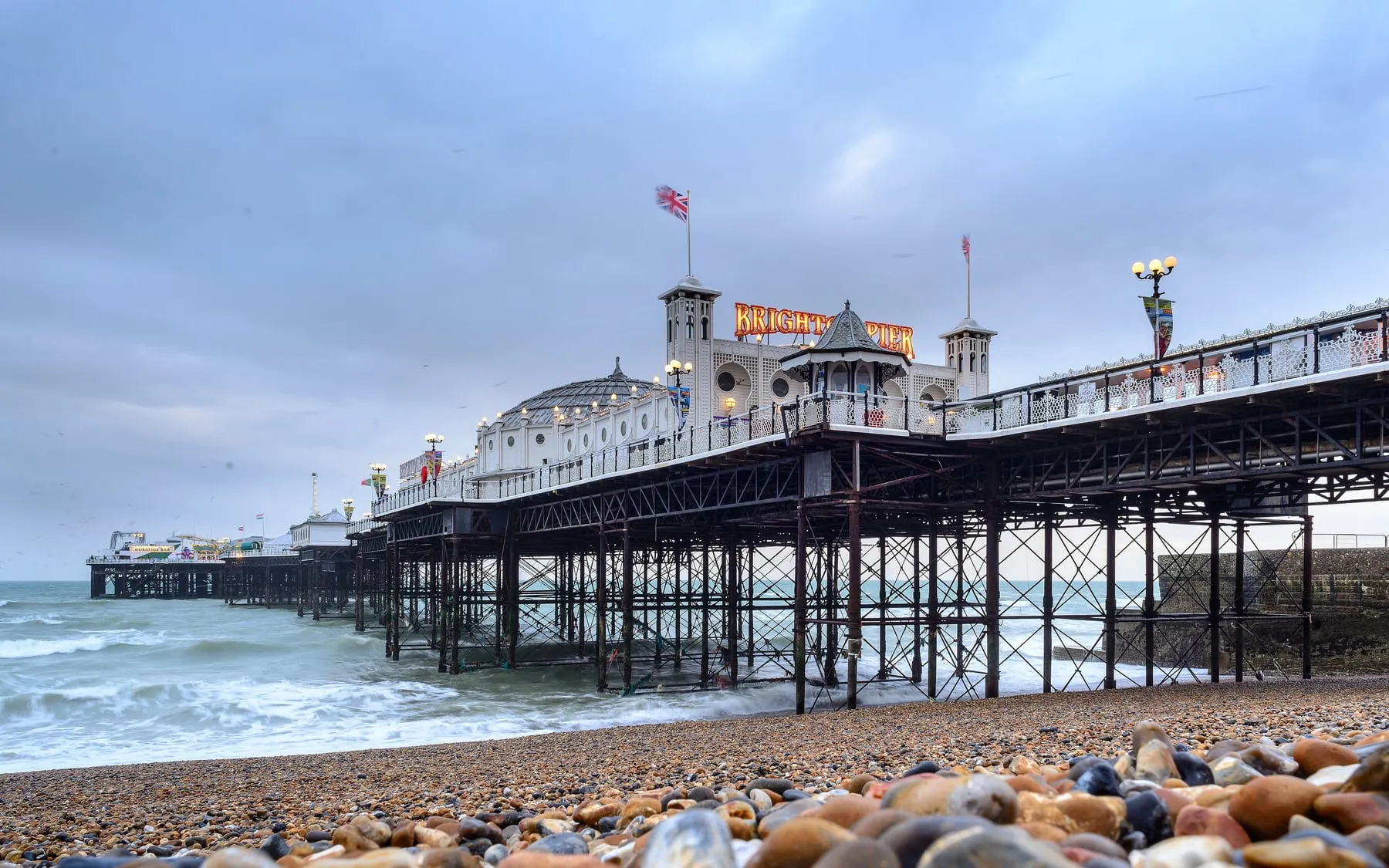
At the Brighton end, the station sits up the hill above the city, and the sea is a straight walk of about 15 minutes downhill, down Queen's Road and West Street to the seafront and the Palace Pier. It is downhill to the beach and uphill back, which is worth knowing with a case. Brighton is a terminus with taxis outside, a dense bus network, and onward coast trains towards Worthing, Lewes and Eastbourne, so it is an easy place to carry on from.
Brighton to Gatwick for a flight
For Brighton residents, the direct train is the obvious way to the airport: about half an hour, frequent, and free of the M23 traffic that can snarl a drive to a flight. Before you travel, check which terminal your airline uses, because a North Terminal flight means the short shuttle ride from the station on top of the walk, and knowing in advance saves a scramble with luggage. Allow the usual buffer before check-in on top of the journey time.
The one thing to plan around is the early or late edge of the day. Trains thin out in the small hours, so for a dawn departure check the first train, and if it does not get you there in time, a taxi or an airport hotel the night before may be the answer. For most daytime flights, though, the train's reliability makes it the sensible default over driving and parking. If you would rather drive, the parking guide compares the car parks by stay length.
Coach, taxi and driving
The train is so quick and frequent on this corridor that it is the clear default, and the coach makes little sense for Brighton specifically: coach links are slower and less frequent than the half-hourly-plus train, and most Gatwick coach services run to and from London rather than the coast. If rail is disrupted by engineering work, most often on winter weekends, replacement buses or a diversion may apply, so check before you travel if a flight depends on it.
A pre-booked taxi or private-hire car is the door-to-door option, and it costs far more than the train, so it earns its place mainly for a group splitting the fare, a heavy load of luggage, or an arrival at an hour when the trains are sparse; the taxi guide has the fare picture. Driving is straightforward, about 30 miles up the A23 and M23, and for a drive-and-fly trip the decision is parking rather than transport. To weigh every mode at once, use the transfers hub.