On this page (10 sections)
Overview
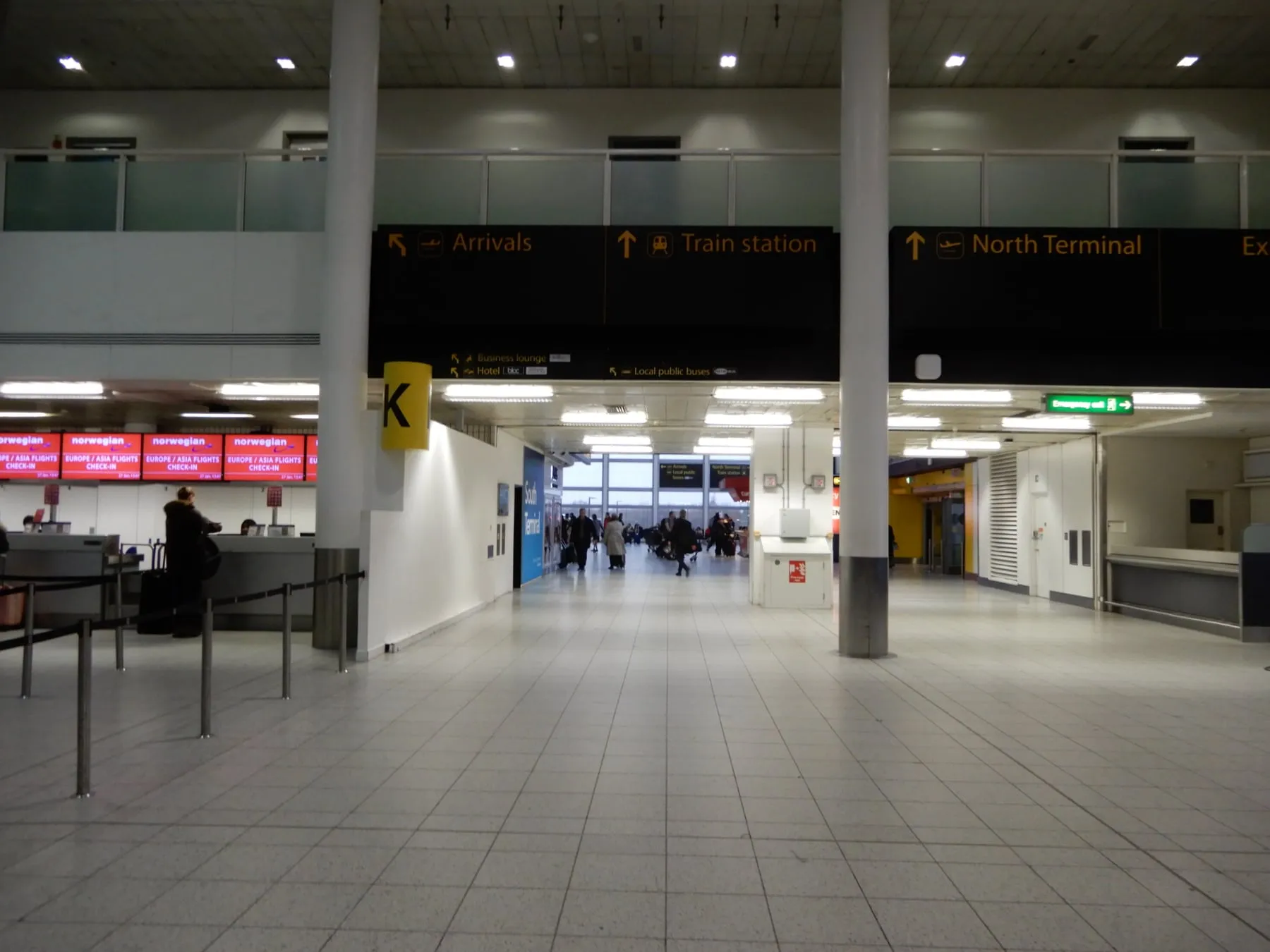
Gatwick South Terminal is the older and larger of the airport's two terminals: the original 1958 terminal building, extended many times since, with around 160,000 square metres of floor space to the North Terminal's 98,000. The airport handled 43.2 million passengers in 2024, second in the UK only to Heathrow, and South carries a broad share of that: around 35 airlines fly from it, from British Airways and Ryanair to Turkish Airlines and Air India. It is also the terminal that came back from the dead: closed for 21 months during the pandemic, it reopened on 27 March 2022 and took most of the airport's airlines back with it.
What sets South apart is the railway station. Gatwick Airport station is physically part of the terminal, a covered walk of about five minutes from the platforms to check-in, which makes South the natural terminal for anyone arriving by train. The North Terminal is a free two-minute shuttle ride away, running around the clock. Check-in, arrivals and the station link all sit on the same level, with security and departures one floor up; the South Terminal map shows the layout level by level.
Airlines at the South Terminal
British Airways is the anchor tenant, running its Gatwick short-haul and long-haul network from South. Around it sit most of the airport's low-cost and leisure names: Ryanair, Wizz Air, Vueling, Norwegian, Jet2, Aegean Airlines, Air Baltic, Iberia Express and SunExpress among them, plus long-haul flying from Norse Atlantic, Turkish Airlines, Air India, China Southern, Kenya Airways and TAP Portugal. The full airline list runs to about 35 carriers at South alone.
Two allocations catch people out. easyJet, Gatwick's biggest airline, flies only from the North Terminal, having consolidated there at the start of the summer 2026 season after years of splitting its flights across both. And TUI splits by flight number: flights beginning BY leave from South, while flights beginning TOM leave from North. Neither terminal assignment is guaranteed forever, so check which terminal your airline uses against your booking before you set out. If you do end up at the wrong one, the shuttle costs you about ten minutes door to door, not a missed flight.
Getting to the South Terminal
By rail, South is the easiest airport terminal to reach in Britain. Four operators serve Gatwick Airport station, with a train leaving on average every four minutes and direct services to about 120 stations. The station was rebuilt in 2023 with a doubled concourse, eight escalators and five lifts, so the walk from platform to check-in is step-free throughout.
Great Western Railway adds direct trains along the North Downs line towards Reading, about 90 minutes away, and Brighton is only 30 minutes south. Contactless and Oyster are valid between Gatwick and London, so you can touch in at the ticket gates without buying anything in advance.
By car, leave the M23 at Junction 9 and follow the South Terminal signs; the sat nav postcode is RH6 0NP. Dropping someone off on the forecourt costs £10 for up to 10 minutes, billed by number-plate camera and payable by midnight the following day, with blue badge holders exempt. For a slower goodbye, the long stay car park gives two hours free and a free bus to the terminal door. Coaches and local buses stop on the terminal's lower forecourt, one level below the trains. Picking up or returning a hire car instead? The car hire guide covers the on-airport desks and return routes.
Parking at the South Terminal
South has four on-airport parking products, and the differences are walking time and who keeps the keys. Short stay is the default multi-storey next to the terminal. Premium short stay puts you on the same level as the terminal entrance with extra-wide bays. Valet hands the car over at the terminal itself. Long stay is the cheap one, a short bus ride out.
| Product | To the terminal | Drive-up price |
|---|---|---|
| Short stay | 4 min walk | £8 per 30 min, £70 per day |
| Premium short stay | 2 min walk, same level | £87.50 per day |
| Valet | 2 min, keys handed over | Pre-book only |
| Long stay | 10 to 12 min by free bus | First 2 hours free, £38 first day, £32 per day after |
Drive-up rates. Pre-booking cuts up to 60% off, and an evening special covers 17:00 to 02:00 for £25 booked ahead.
Those gate prices make the case for booking: nobody should pay £70 for a day of short stay when the same space costs a fraction pre-booked. Prices, booking windows and the walking routes are on the South Terminal parking page, and every parking option at Gatwick is compared across both terminals if you have not settled on where to leave the car.
Check-in and security
Check-in fills the long hall on Level 20, the same level you enter from the station walkway, split into zones lettered A to K with a separate premium area at Zone A. Screens above each zone show which airlines are using it that day; allocations shuffle, so trust the screens over habit. Gatwick's advice is to arrive at least two hours before departure. Desks typically open four hours before long-haul flights, three hours before European flights and two hours before UK and Ireland flights.
Security sits one floor up on Level 30, and Gatwick's newer scanners have retired the worst of the ritual: liquids can go through in containers of up to two litres (as long as the container is not metal or double-walled), and laptops, tablets and other large electricals stay in your bag. Coats, jackets and belts still come off. Fast Track can be pre-booked from £6 if you want the shorter lane, and travellers who need help can use the dedicated lane by the Assisted Travel desk in the check-in area; the special assistance guide explains how to arrange support from kerb to gate.
Once through, the departure lounge spreads over two levels, with gates reached from three piers: gates 1 to 5 on Pier 1, and the bulk of the gates, numbered 10 to 95, on Piers 2 and 3. The screens show a walking time next to every gate; take the longer ones at face value, because the far ends of the piers are a real walk and the gate will not wait.
Facilities
Landside, the check-in level covers the practical basics: Boots, WHSmith and an M&S Simply Food for the forgotten essentials, cash machines, bureaux de change (the currency exchange guide covers rates and why airport counters should be your last resort), and a left-luggage desk on the check-in level for bags you want to store rather than fly. Airside, the route from security funnels through a large World Duty Free before opening into the lounge proper; the duty free guide and the wider shops directory cover what is actually worth buying there.
Three hotels are effectively part of the building: Bloc inside the terminal on the departures level, YOTELAIR landside near arrivals, and the Hilton across a covered walkway. All the airport's options, on-airport and off, are compared in the guide to where to stay at Gatwick. For everything else, from wifi to water fountains, the services index lists each facility and where it lives, the wifi guide covers getting online, and the smoking areas page maps where you can and cannot light up. To see how South, North, the station and the car parks fit together, start with the airport map.
Food and drink
Before security the choice is deliberately simple: coffee and grab-and-go on the check-in level, plus a Wetherspoon and a table-service restaurant on the departures level above, which are the places to sit down if you are seeing someone off or killing time before check-in opens.
Airside is where the terminal earns its keep. The departure lounge carries the recognisable chains (Nando's, Wagamama, Pizza Express, itsu, Pret, Starbucks and a second Wetherspoon) alongside a taphouse and a run of coffee and juice counters, spread across both levels of the lounge. Landside or airside, every venue at South is listed with locations and typical opening patterns on the South Terminal restaurants page, with the airport-wide picture on the restaurants guide.
Lounges
Five lounges operate at South, all airside on or just off the upper level of the departure lounge. No1 Lounge is the flagship pay-per-visit option, My Lounge is its cheaper, more casual sibling, Clubrooms is the quieter table-service tier with Fast Track security included, and Club Aspire is the fourth paid option, with entry from £34. British Airways runs its own lounges for eligible Club and status passengers. Walk-up entry is never guaranteed at peak; access rules, prices and booking links are on the South Terminal lounges page, and the lounge guide compares every option across the airport.
Arriving at the South Terminal
Arrivals is a short sequence: passport control, baggage reclaim on the belts one hall along, customs, then out into the arrivals concourse on Level 20. The concourse is compact, with the exit doors for international and domestic arrivals a short walk apart, so meeting someone is straightforward: wait within sight of the doors, near the coffee counter. Collecting by car, skip the forecourt and its cameras altogether: the two-hour free window in the long stay car park, with the free bus to the terminal, is the sensible way to pick someone up.
Onward from arrivals, everything radiates from the same level: the station walkway for trains, lifts down to the buses, the shuttle for the North Terminal, and the taxi rank outside. Live arrival times, and what to do when a flight diverts or delays, live under flight information.
Practical tips
- Confirm the terminal before you leave home. easyJet is North-only, TUI splits by flight prefix (BY at South, TOM at North), and allocations move. The terminal on your booking confirmation is the truth, and the shuttle costs you ten minutes if you get it wrong.
- Do not improvise on the forecourt. The cameras charge £10 for a drop-off visit, and an unpaid charge becomes a parking charge notice. Decide in advance: forecourt for a fast drop, long stay for the free two hours, for collections as much as drop-offs.
- Coming by train, allow five minutes from platform to check-in. The walk is short and step-free, but it is a real walk with escalators and a concourse crossing. A train that lands at the airport 40 minutes before your bag drop closes is tighter than it sounds.
- Fly early in the holidays, take the full two hours. The morning bank of short-haul departures is the terminal's crunch point. Later in the day, security tends to move faster and the lounge is calmer.
- Pack for the stricter airport. South's scanners take two-litre liquid containers, but the airport you fly home from may still hold the 100ml line. If your return airport has not upgraded, a big bottle that sailed through Gatwick gets binned there.