On this page (6 sections)
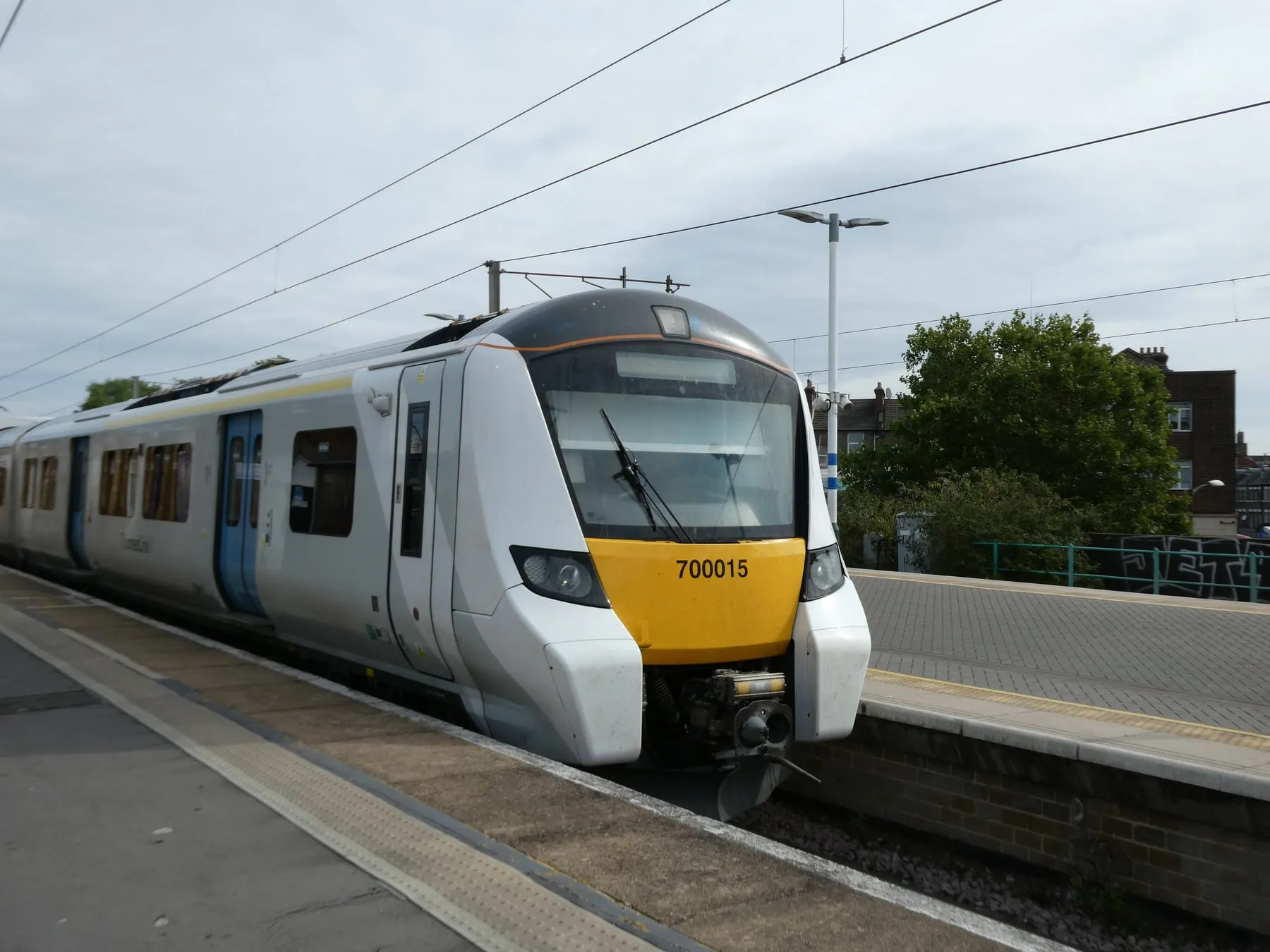
Thameslink in one minute
Thameslink is the north-south service that runs through the core of London to Gatwick and beyond, rather than stopping at a London terminus. From the airport its central stops are London Bridge, Blackfriars, City Thameslink, Farringdon and St Pancras International, with London Bridge around 30 minutes away and the rest a few minutes further. Up to eight trains an hour run at busy times, and a walk-up single to London is about £15, well below the Gatwick Express fare for a comparable time.
The reason it matters is reach and value together. Because Thameslink threads the centre, it reaches the City, the Elizabeth Line at Farringdon, and the Eurostar terminus at St Pancras, none of which the Gatwick Express touches, and it does so for about a third less. The one thing it does not do is Victoria. If Victoria is your destination, you want the Express or Southern; for almost everywhere else in London, Thameslink is the sensible default. The rest of this page fills that in.
Route and stops through London
Heading north from Gatwick, Thameslink calls at London Bridge first, around 30 minutes from the airport, then Blackfriars, City Thameslink, Farringdon and St Pancras International in quick succession through the central tunnel. Each of those is a useful interchange. London Bridge serves the City and the Jubilee and Northern lines; Blackfriars straddles the river with entrances on both banks; Farringdon is the cross-platform change for the Elizabeth Line, which opens up Canary Wharf, Paddington and Heathrow without a separate Underground hop; and St Pancras International is the Eurostar terminus and the connection for trains north.
Beyond St Pancras the same trains continue to Luton, Luton Airport Parkway and Bedford, which makes Thameslink the rare direct airport-to-airport rail link, Gatwick to Luton without changing. Southbound, most Gatwick services have come down from Brighton via the Sussex coast, so the line joins the two ends of the Brighton Main Line through the middle of London. The named-station corridors have their own pages: London Bridge to Gatwick, Farringdon to Gatwick, St Pancras to Gatwick and Luton to Gatwick each cover their leg in detail. If you are starting from King's Cross, the Thameslink platforms are at St Pancras next door rather than at King's Cross itself.
Times and frequency
Thameslink is one of the most frequent airport rail services in Britain: up to eight trains an hour at peak, which means turning up and catching the next one rather than planning around a timetable. Off-peak the frequency eases but stays high, and there is usually a train within a few minutes for most of the day. Late at night the gaps widen, so a check of the last train is worth it if you are travelling back after around 23:00.
On time, most central destinations are under 35 minutes from Gatwick, with London Bridge around 30. Not every train is equally fast, because some make more stops on the Gatwick side than others, so the departure board is worth a glance for the quicker service when two are close together. The time difference into the centre against the non-stop Express is small, a few minutes at most, which is the crux of the value argument below.
Fares, tickets and contactless
A walk-up Anytime Day Single from Gatwick to London on Thameslink is about £15, the same regulated fare Southern charges, and roughly £9 less than the Gatwick Express for a similar journey. A return valid a month or a day return can beat two singles, so it is worth checking the return options rather than buying two ones. On the longer legs beyond London, towards Bedford or on connections north, advance tickets bought ahead can undercut the walk-up price.
Contactless is usually cheaper again for the London leg. Contactless cards, phones and Oyster are valid between Gatwick and London on Thameslink: touch in at the airport gates, touch out at your London station, and the pay-as-you-go fare set by Transport for London is calculated for you, generally below the walk-up single and with nothing to buy in advance. For destinations past the contactless zone, use a machine at the station or book online. The upshot is that Thameslink is the cheapest of the airport rail options at walk-up prices and cheaper still on contactless.
Thameslink versus Gatwick Express
The two trains answer different questions. Gatwick Express is non-stop to Victoria in 31 minutes for £24.10, and it does that one route as fast as the line allows. Thameslink reaches London Bridge, Farringdon and St Pancras in a similar time for about £15, and continues across and beyond London. So the decision is not really about the trains, it is about where you are going. For Victoria, the Express is purpose-built and a Southern service is the cheaper stopping alternative. For the City, the Elizabeth Line, Eurostar, or anywhere north, Thameslink is both cheaper and more direct.
Put plainly: unless Victoria is your destination, Thameslink is usually the better value and often the better route too. The full side-by-side, including Southern's role, sits on the Gatwick Express page, and the rail overview compares all four operators at once. If you are weighing rail against coach, taxi or driving, every way to reach Gatwick lines them up on price and time.
Where to board and luggage
Thameslink uses Gatwick Airport station, which is part of the South Terminal, about five minutes on foot from the check-in level along a covered walkway with no road to cross. Every platform has been step-free since the station's 2023 rebuild, and there is a wide staffed gate on each gateline for trolleys and heavy bags. The board on the concourse shows every departure across all operators, so check your platform there rather than assuming, since Thameslink does not use a single fixed one. The station guide has the full layout.
From the North Terminal there is no nearer station: take the free shuttle across to the South Terminal first, a two-minute ride that runs day and night, then head down to the platforms, allowing about ten minutes in total. Thameslink runs mainline commuter stock rather than a dedicated airport train, so luggage space by the doors can be tight at rush hour; travelling with large cases outside the busiest commuter windows makes the trip easier.