On this page (6 sections)
The rail options in one minute
Gatwick is a rail-first airport. The station is part of the South Terminal, so an arriving train drops you a covered five-minute walk from check-in rather than at a bus stop across a car park. A train departs on average every four minutes, with direct services to around 120 stations and more than 700 reachable with a single change. To central London the ride is 30 to 45 minutes depending on which operator you catch and where you get off.
Four operators run from Gatwick Airport station, and choosing between them is the whole decision. Gatwick Express runs non-stop to Victoria and charges a premium for it. Thameslink threads through central London to London Bridge, Farringdon and St Pancras and is usually the best value. Southern covers Victoria the stopping way and the Sussex coast. Great Western Railway runs a separate line west towards Reading without going through London. Contactless and Oyster work to and from London on all of them.
The four operators and where they go
The four services overlap on the map but split cleanly by purpose. Pick by destination, not by brand.
Gatwick Express
The non-stop service to London Victoria, 31 minutes end to end, every 15 minutes from 05:15. It runs Class 387 Electrostar trains with luggage racks and free wifi, and it does one thing well: Victoria as fast as the line allows, with no intermediate stops to slow it down. The catch is the fare. A walk-up single is £24.10, with 10% off booked online or in the app, which makes it the most expensive way from Gatwick to London by some margin. The full case for and against sits on the Gatwick Express fares and times page.
Thameslink
The through-London workhorse, and for most travellers the sensible default. Up to eight trains an hour run north from Gatwick into the central core: London Bridge in around 30 minutes, then Blackfriars, City Thameslink, Farringdon and St Pancras International, before continuing to Luton and Bedford. Farringdon is the cross-platform interchange for the Elizabeth Line, and St Pancras is the Eurostar terminus, which makes Thameslink the natural choice for anywhere east-west across London or onward by international rail. It does not serve Victoria. The Thameslink route and stops page covers the full corridor.
Southern
Southern reaches Victoria the stopping way, about 33 minutes on average and 30 at its fastest, calling at East Croydon and Clapham Junction on the way, which is exactly what you want if one of those is your destination. It shares the walk-up London fare with Thameslink, so it is a cheaper route to Victoria than the Express for anyone not in a desperate hurry. Southern also runs south to Brighton in about 30 minutes and along the Sussex coast, the direction most arriving holidaymakers and returning locals actually travel.
Great Western Railway
The odd one out, and the most useful service almost nobody expects. Great Western Railway (GWR on second reference) runs the North Downs line from Gatwick through Redhill, Dorking and Guildford to Reading, about 90 minutes away, with connections into the west of England and the Thames Valley. It lets you reach Reading, and change there for Oxford, Bristol or South Wales, without crossing London at all. Trains are hourly rather than frequent, so it rewards a glance at the timetable before you travel.
Fares, tickets and contactless
There are three ways to pay for the London leg, and they are not equal. The cheapest walk-up option is an Anytime Day Single on Southern or Thameslink, about £15, the same regulated fare whichever of the two you take. Gatwick Express charges £24.10 for the same journey time and a non-stop run, its own 10% online discount being the only easy saving on it. So the fare gap between the non-stop train and the stopping trains is roughly a third, for a difference of a few minutes and a couple of stops.
Contactless and Oyster are the third way and often the cheapest. Cards, phones and Oyster are valid through the ticket gates between Gatwick and London: touch in at the airport, touch out at your London station, and the pay-as-you-go fare set by Transport for London is worked out for you. That usually beats a paper single, and it saves queueing at a machine. For journeys beyond the contactless zone, to Brighton, Reading, Cambridge or the north, buy from a machine at the station or online, and note that advance singles on those longer routes can undercut the walk-up price substantially. Railcards apply on all operators except that discounts do not stack with the contactless cap.
One habit worth keeping: the return leg matters. A day return or an open return valid for a month can be cheaper than two singles, and Gatwick Express prices a return at £47.90, valid a month, which is why plenty of travellers just tap in with contactless and stop thinking about it.
Which train to pick
The honest summary is short. If you are going to Victoria and time matters more than money, take the Express. If you are going anywhere across central London, or you want the best value to Victoria's rivals, take Thameslink. If your destination is south London, Croydon or the coast, Southern is built for you. If you are heading west, GWR saves you the London detour entirely.
For most people the choice collapses to Thameslink versus Gatwick Express, and the deciding factor is your actual London destination rather than the airport end, which is identical for both. The side-by-side on Gatwick Express versus Thameslink lays out that comparison in full. And if you are still weighing rail against the alternatives, the full Gatwick to London corridor compares every mode into the centre on price and time.
The station and boarding
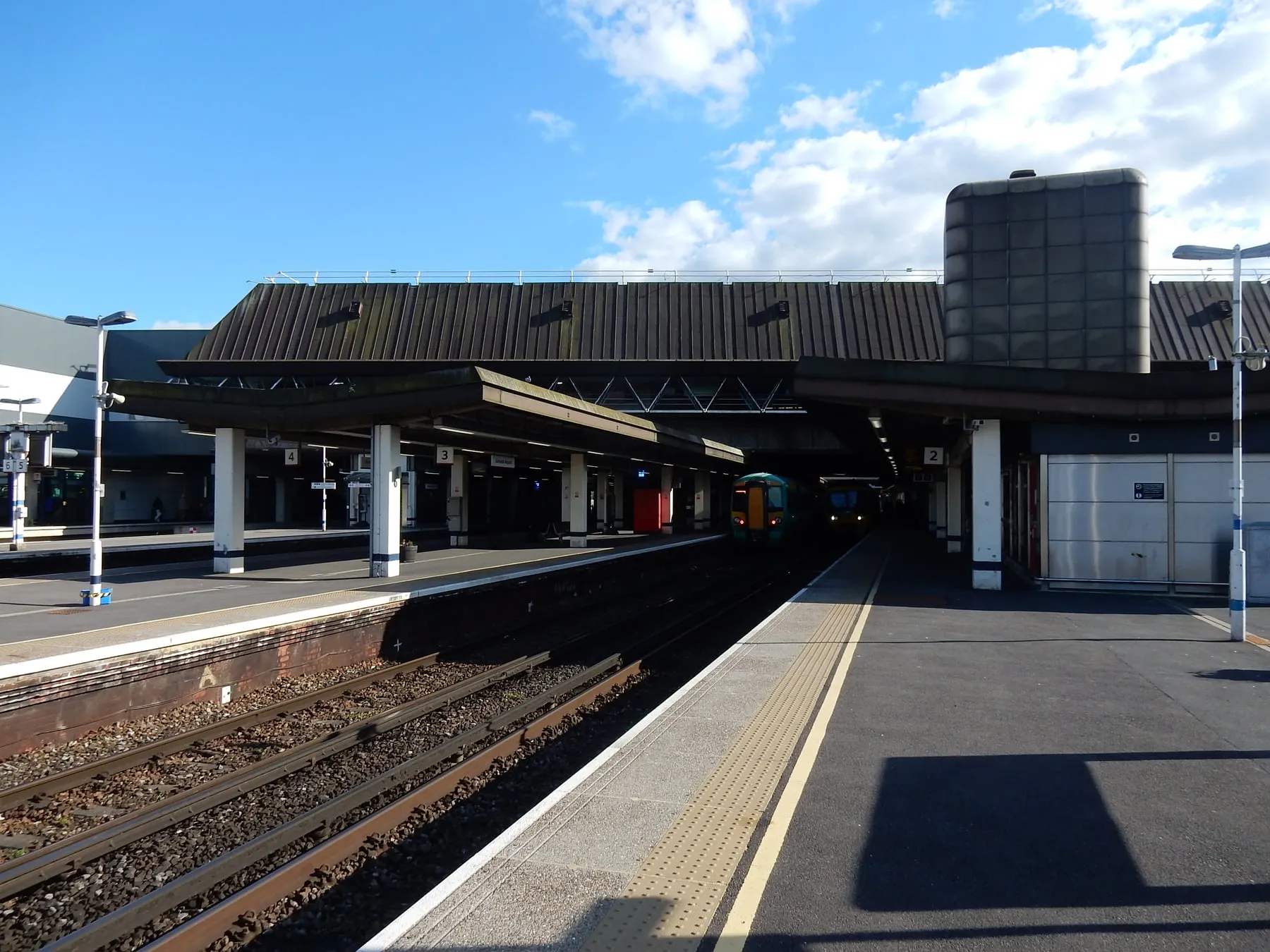
All four operators use Gatwick Airport station, which is part of the South Terminal. From the platforms, lifts and escalators bring you up to the concourse and a covered walkway lands you on the check-in level, about five minutes on foot. There is no road to cross. Every one of the seven platforms is step-free after the station's 2023 rebuild, and the ticket gates have a wide staffed gate on each line for trolleys and heavy luggage. The full station layout, including where each operator's platforms sit, is on the Gatwick station guide.
For the North Terminal, do not look for a platform closer to it, because there is not one. Come up to the South Terminal concourse and follow the signs to the free shuttle, which crosses in about two minutes and runs around the clock. Budget roughly ten minutes from platform to the North Terminal check-in hall. Departure boards on the concourse show every service across all operators, so check your platform there rather than assuming.
Train versus coach, taxi and car
Against the other ways into London, the train usually wins on the combination of speed and price. A coach is cheaper still but slower and subject to the M23 and the South Circular, which makes it a budget choice rather than a fast one. A taxi or private hire is door to door and carries luggage without a walk, but the fare into central London runs well into the tens of pounds and the traffic risk is real at peak times. Driving and parking only makes sense if the airport, not London, is your destination.
The upshot: for reaching central London from Gatwick, rail is the default, and the only question is which operator. For every other corridor, and for the full price-and-time comparison across coach, taxi and car, every way to reach Gatwick sets them side by side.