On this page (6 sections)
Farringdon to Gatwick in one minute
The Farringdon to Gatwick trip is a single direct Thameslink train, around 45 minutes with no change, running straight through on the Brighton line. Farringdon sits on the eastern edge of the West End in Clerkenwell, but its pull for airport travellers is the rail interchange rather than the address: it is the only station in London to sit on both the Thameslink route south to Gatwick and the Elizabeth Line running east to west across the city. That combination makes it the natural place to pick up a Gatwick train if you are coming across London rather than out from a terminus.
The one-line answer: if you are already on the Elizabeth Line, ride it to Farringdon and change once onto a southbound Thameslink for Gatwick; if you are starting at Farringdon, simply catch that southbound Gatwick or Brighton service and tap in with contactless for about £10.70 off-peak. The same works in reverse for the Gatwick to Farringdon direction. For the full spread of London stations and modes, the Gatwick to London guide compares them all; this page stays on the Farringdon corridor and its interchange.
The Elizabeth Line interchange
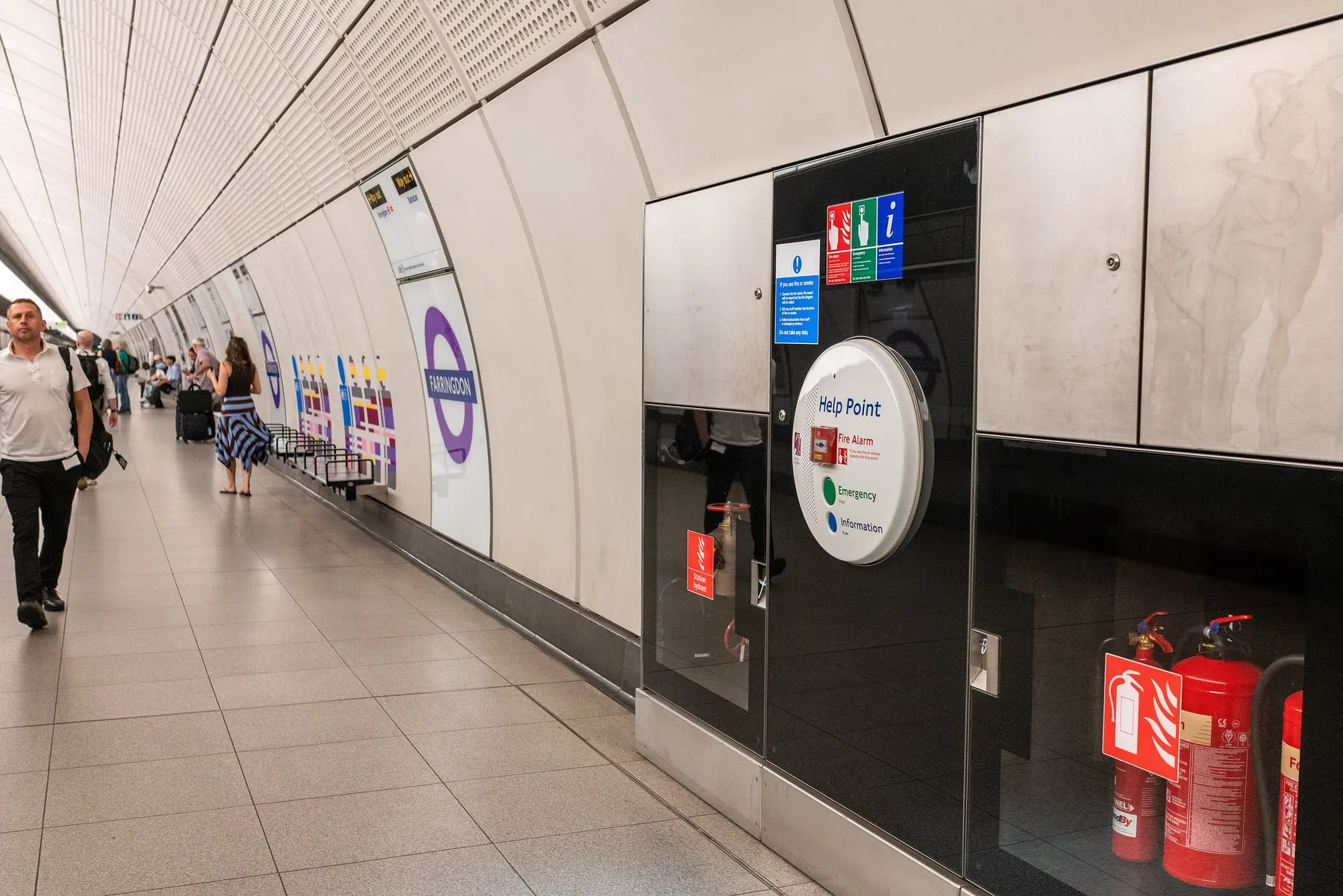
Farringdon is the only station on both the north-south Thameslink route and the east-west Elizabeth Line, and it also carries the Circle, Hammersmith & City and Metropolitan lines, five rail services under one roof. The Elizabeth Line reaches a long way in both directions: east to Canary Wharf, Abbey Wood and out to Shenfield, and west through Tottenham Court Road, Bond Street and Paddington towards Ealing, Reading and Heathrow. From any of those, you ride one train to Farringdon and step across to a direct Gatwick service, without ever passing through a mainline terminus or hauling luggage across town on the Underground.
The change itself is a same-station interchange rather than a cross-platform step: the Elizabeth Line platforms sit deep below ground, and the Thameslink platforms are higher up, so you move between them by lift or escalator, all step-free and under cover. The practical upshot is real. A worker heading out from Canary Wharf, a visitor arriving into Paddington, or a passenger on the Elizabeth Line's Heathrow branch can all treat Farringdon as their Gatwick gateway, which is why the Heathrow-side link makes it a useful rail meeting point between the two airports. For the wider airport-to-airport picture, the transfers hub sets out every option.
The direct Thameslink route
Thameslink is the service that runs through the middle of London instead of ending at a terminus, joining Bedford and Cambridge in the north to Brighton in the south. The Gatwick trains from Farringdon are the southbound Brighton services: they call at City Thameslink, Blackfriars and London Bridge, then head for the airport, with the quickest only stopping at East Croydon on the run south. No change is needed anywhere. Northbound out of Gatwick, the same trains carry on from Farringdon to St Pancras and towards Luton and Bedford.
On the fastest services the trip is around 45 minutes, rising to about 55 on trains that make more stops on the Gatwick side, a few minutes longer than London Bridge because Farringdon sits further along the central core. Up to eight Thameslink trains an hour run on the corridor at peak, so waits are short through the day and lengthen only late at night. The next core station north, St Pancras, is a couple of minutes further still. For live times on your day of travel, check National Rail or the Thameslink app rather than relying on a fixed timetable.
Fares, tickets and contactless
A walk-up Anytime Day Single between Farringdon and Gatwick is about £15, the same regulated fare that applies to any central London station, and well below the £24.10 the Gatwick Express charges from Victoria. If you are coming back, a day return or a longer-dated return can beat two singles, so it is worth checking the return options. There is no advance-purchase saving on this leg, because the walk-up fare is fixed rather than a price that rises towards the day.
Contactless is usually cheaper and simpler, and it handles the interchange neatly. Contactless cards, phones and Oyster are valid all the way to Gatwick: touch in at your first station, touch out at the airport, and the pay-as-you-go fare is worked out for you, about £10.70 for an off-peak single into zone 1 and £19.20 at peak. If you arrive at Farringdon on the Elizabeth Line, that single tap in and tap out covers the whole trip as one journey, so there is no second ticket to buy for the change. Peak means 06:30 to 09:30 and 16:00 to 19:00 on weekdays, with weekends off-peak all day, and fares reset each January, so check the live price. The Thameslink guide has the full ticketing detail.
At Farringdon and at Gatwick
Farringdon has two ticket halls and is fully step-free, rebuilt and extended when the Elizabeth Line opened in 2022. Gatwick trains use the Thameslink platforms, which are the National Rail platforms rather than the deep Elizabeth Line ones, so follow the signs and the departure boards to the next southbound service towards Gatwick Airport or Brighton. The Circle, Hammersmith & City and Metropolitan lines share the sub-surface level, so onward Underground connections at Farringdon are quick if you need them.
At the airport end the station is part of the South Terminal, a covered five-minute walk from check-in with no road to cross, and every platform has been step-free since the 2023 rebuild; the station guide has the full layout. If you are flying from the North Terminal, take the free shuttle across from the South, a two-minute ride that runs day and night, allowing about ten minutes in all. Thameslink runs mainline commuter stock rather than a dedicated airport train, so luggage space by the doors is tight at rush hour; travelling with big cases outside the busiest commuter windows makes the trip easier.
Farringdon, London Bridge or St Pancras?
All three are stops on the same Thameslink line to Gatwick, and the journey times are within a few minutes of each other, so the sensible rule is to use the core station you can reach most easily rather than chasing the fastest one. Farringdon is the pick for the Elizabeth Line and the Clerkenwell and City fringe. London Bridge is closest to the City proper and the Jubilee and Northern lines, and a shade quicker to the airport. St Pancras suits Eurostar arrivals, the King's Cross interchange, and anyone coming in from the north. Pick the station nearest where you are, and the same train serves you at each.
If the through route is disrupted, or a taxi simply suits your party better, a pre-booked private-hire car runs door to door for roughly £65 to £90 and about an hour in clear traffic, which can be worth it for a group splitting the fare or a heavy load of luggage; the taxi guide covers it. National Express coaches serve Victoria Coach Station rather than Farringdon, so for this corridor the train is the direct link. To weigh every mode at once, use the transfers hub, and if you are driving to the airport instead of taking the train, the parking guide compares the car parks by stay length.